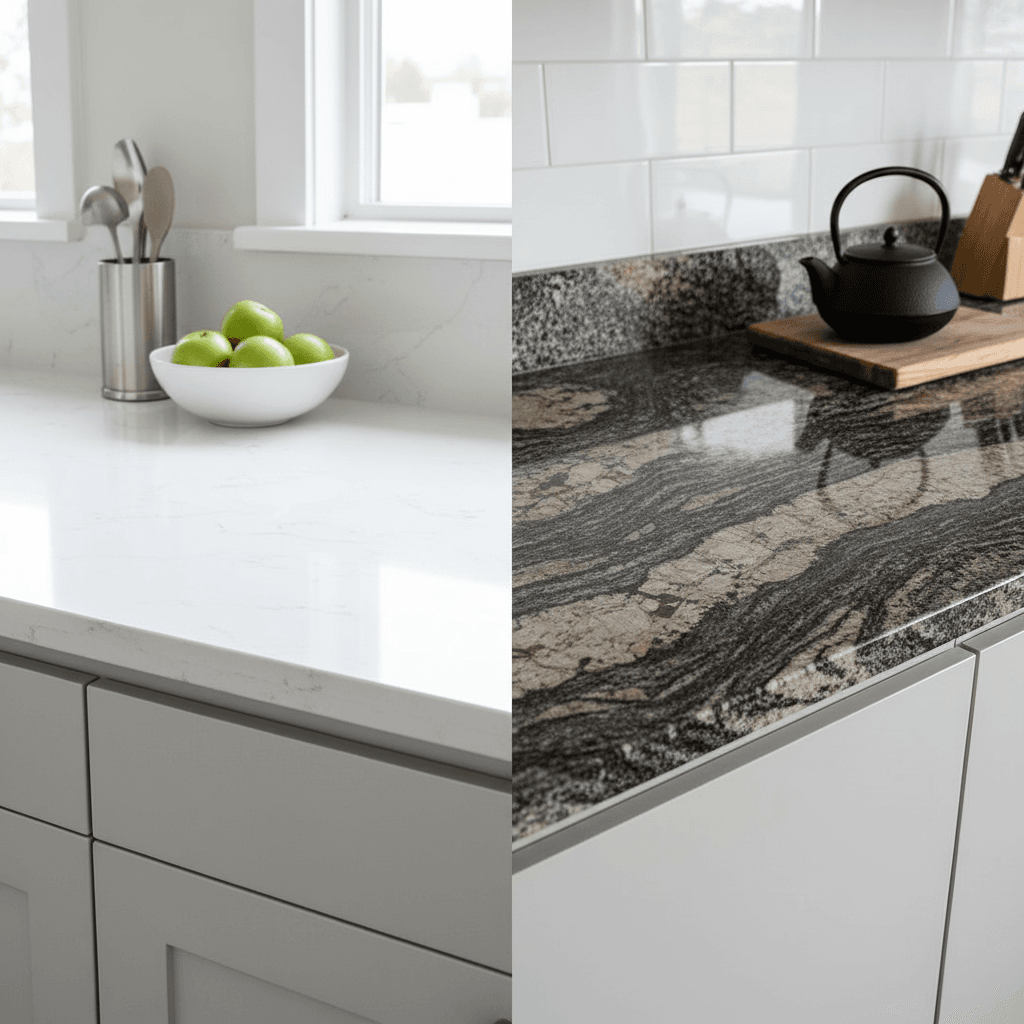
Compare quartz and granite
Many homeowners recognize quartz and granite as two of the leading choices for kitchen and bathroom countertops. Both materials offer unique advantages, from eye-catching surfaces to proven long-term performance. Granite is 100 percent natural, quarried from the earth and cut into slabs of varying patterns. Quartz, on the other hand, is synthesized from about 90 to 95 percent ground quartz mixed with resin binders and pigments. This manufacturing approach allows quartz to come in consistent colors and designs that can resemble other stones.
Because each granite slab is naturally formed, its veins, speckles, and color contrasts are one-of-a-kind. Some homeowners value this organic character, while others prefer the uniformity of quartz. In terms of immediate cost, granite can run between $40 and $100 per square foot, with quartz often falling in a similar or slightly higher price range, depending on style and availability [1]. Pricing for both tends to overlap significantly in most Atlanta showrooms, making personal preference a major factor.
Evaluate durability and maintenance
Durability remains a priority for those seeking to invest in long-lasting surfaces. Quartz countertops rank around 7 out of 10 on the Mohs hardness scale, indicating strong resistance to chipping or cracking [2]. Granite also has high hardness, but differences in mineral composition mean some slabs might be more susceptible to chips or mild scratches. Overall, both stand up well to daily preparations in busy kitchens.
Maintenance routines, however, do vary. Granite is naturally porous, so it generally benefits from sealing to prevent stains and moisture absorption. Certain lighter shades require more frequent resealing to maintain their protective layer. Quartz surfaces, being non-porous, do not require sealing and resist stains from wine or coffee spills more effectively [3]. Frequent cleaning with mild soap and water is typically sufficient for both materials, although granite owners who seal their counters should recheck them once or twice a year, especially if there is heavy daily usage.
Estimate how they affect home value
Homeowners often wonder which countertop choice, quartz or granite, has a stronger impact on resale value. Both can elevate a property’s market appeal, but each offers slightly different selling points. Granite’s reputation for natural luxury has long drawn buyers looking for an authentic stone aesthetic. A well-maintained slab with consistent graining can become a major focal point in the kitchen.
Quartz appeals to savvy homeowners who appreciate minimal maintenance. Buyers often find the material’s ease of cleaning and uniform appearance a practical advantage. Also, many architects and designers in Atlanta specify quartz for projects due to its combination of style and reliability, which supports the impression of a modern and thoughtfully designed home. Ultimately, the home value boost depends on the quality of the slab, the overall design scheme, and how well the countertop color and style align with the house’s character. According to multiple remodeling professionals, both quartz and granite can fall within similar cost ranges and deliver comparable returns on investment [4].
Consider local installation in Atlanta
Local installation expertise often makes the difference between a flawless finish and unnecessary headaches. Atlanta homeowners typically have large kitchens, curved islands, or open-concept layouts that require precision cutting and fitting. An experienced local fabricator like Granite and Marble Solutions can help measure the space, anticipate custom cuts for sink areas, and determine the right edge profiles.
Quartz tends to be easier to fabricate because of its uniform density, whereas certain granite slabs, especially those with dramatic veining, call for specific cutting techniques to present the pattern attractively. Proper installation prevents damage during transit or misalignment during placement. Local teams also shorten turnaround times because they handle cutting and finishing on-site or in a nearby workshop. This faster, more responsive approach can save homeowners effort, especially if they are coordinating multiple steps during a kitchen remodel.
Use cases and style preferences
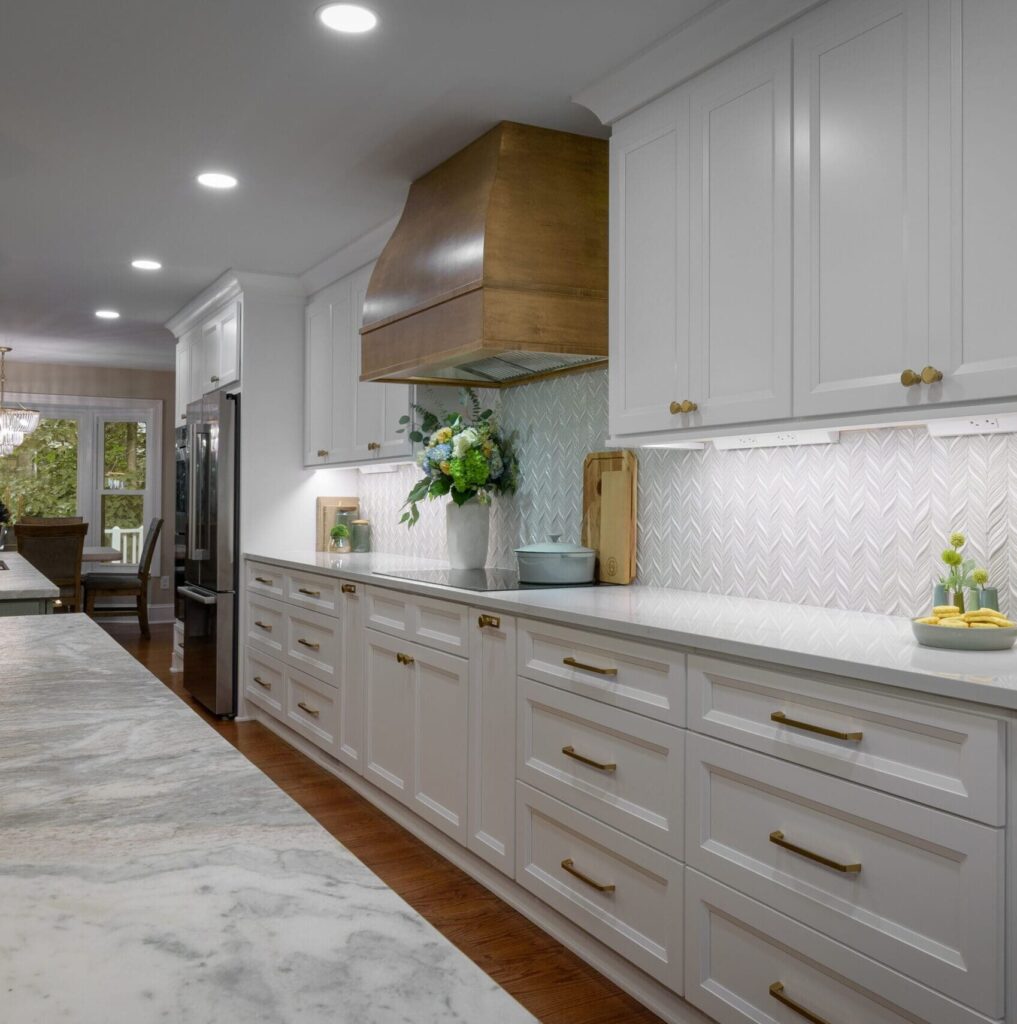
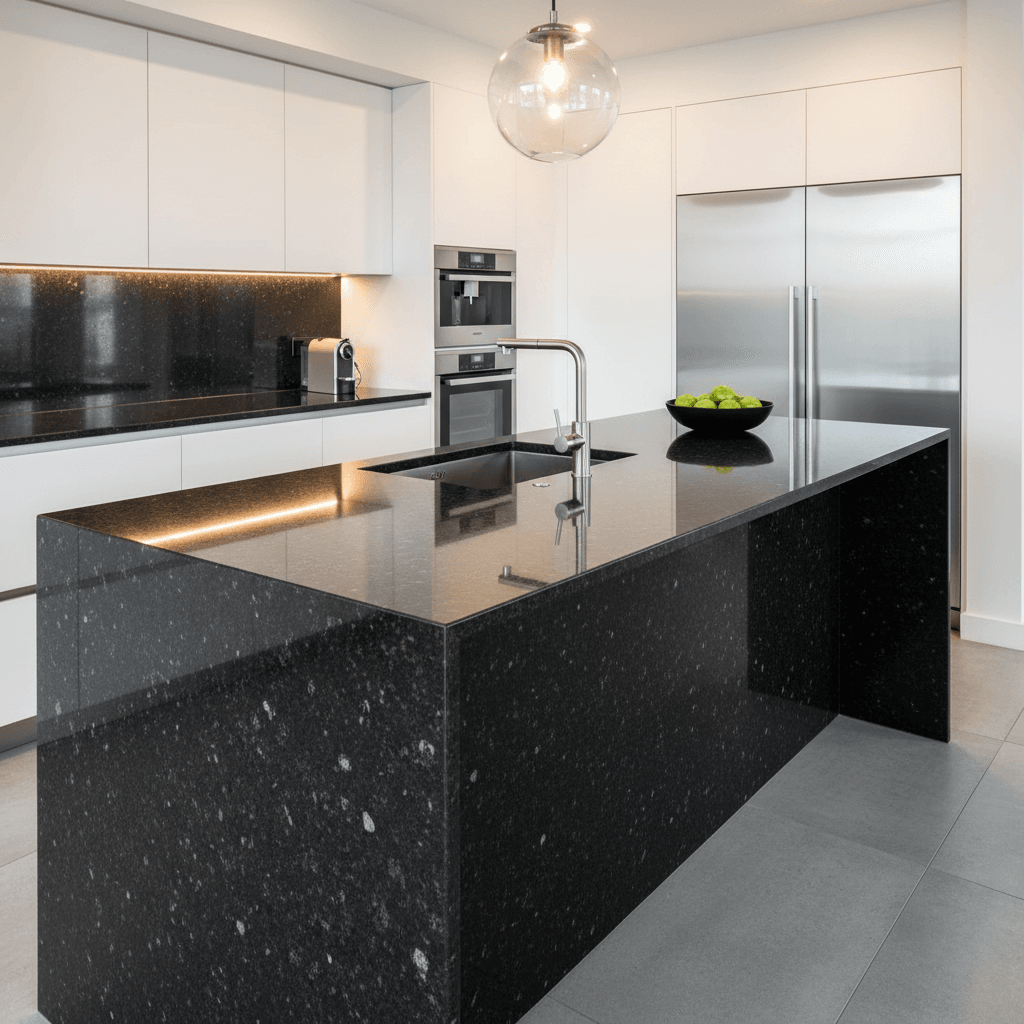
Many individuals favor quartz for its resistance to stains and uniform color, which suits contemporary or minimalistic kitchen themes. Those who prefer lighter countertop styles might look into white quartz kitchen countertops, which can brighten interiors without the constant worry of resealing. Granite, in contrast, often appears in transitional or traditional settings, where natural stone’s unique swirls and speckles create warmth and depth.
For homeowners wanting the look of a natural stone but craving easy upkeep, quartz kitchen countertops can effectively mimic granite’s variegated patterns. They can also resemble marble, making them a go-to choice for those who love classic beauty but would rather avoid the porous nature of true marble. While both quartz and granite work in a range of designs, it could be wise to think about how each surface ties together with cabinetry, flooring, and backsplash colors before committing to the investment.
Frequently asked questions
- Is quartz more expensive than granite?
It depends on the slab. Granite typically starts around $40 per square foot, while quartz may start closer to $50 or $60. Still, cost variances can occur if the granite is rare or the quartz is high-end [1]. - How often does granite need sealing?
Granite sealing needs depend on the color and porosity of the stone. Many homeowners reseal once or twice a year, though some darker granites might need less frequent maintenance [5]. - Does quartz really resist stains better?
Yes. Quartz is engineered to be non-porous and does not absorb liquids easily. This construction helps it resist stains from wine, coffee, or other everyday kitchen spills [3]. - Which material is better for outdoor kitchens?
Granite handles direct sunlight and high temperatures more effectively. Quartz can discolor or be affected by UV exposure, so many professionals recommend granite for outdoor applications [3]. - Can they both handle hot cookware?
Granite tolerates higher temperatures, but heated pans might still cause thermal shock. Quartz is more prone to heat damage because the resin binds can melt. It is best to use trivets for both materials, as neither countertop is entirely heat-proof.
Granite and quartz each bring aesthetics, practicality, and potential home value boosts to the table. With skilled local installers and the right maintenance routine, both can look stunning for many years. By selecting a style that aligns with the home’s design and personal preferences, homeowners in Atlanta are likely to enjoy a reliable and elegant countertop investment.
Related Articles:
Why White Quartz Kitchen Countertops Are a Smart Investment
Quartz Kitchen Countertops: Durable Beauty for Your Space
Granite Kitchen Countertop Cost: What Homeowners Should Know
Soapstone Countertops vs. Quartz – Which Is Right for You?
Black Granite Countertops: Colors, Design, and What to Know
Recent Projects:
Summit Way | Fantasy Brown and Brunello Quartz Countertops
Summit Way | Fantasy Brown and Brunello Quartz Countertops
Spring View Project | River Black Granite
Marlow Project | Amazonite Gray Quartz
References
Here’s Why Our Customers Trust Us: