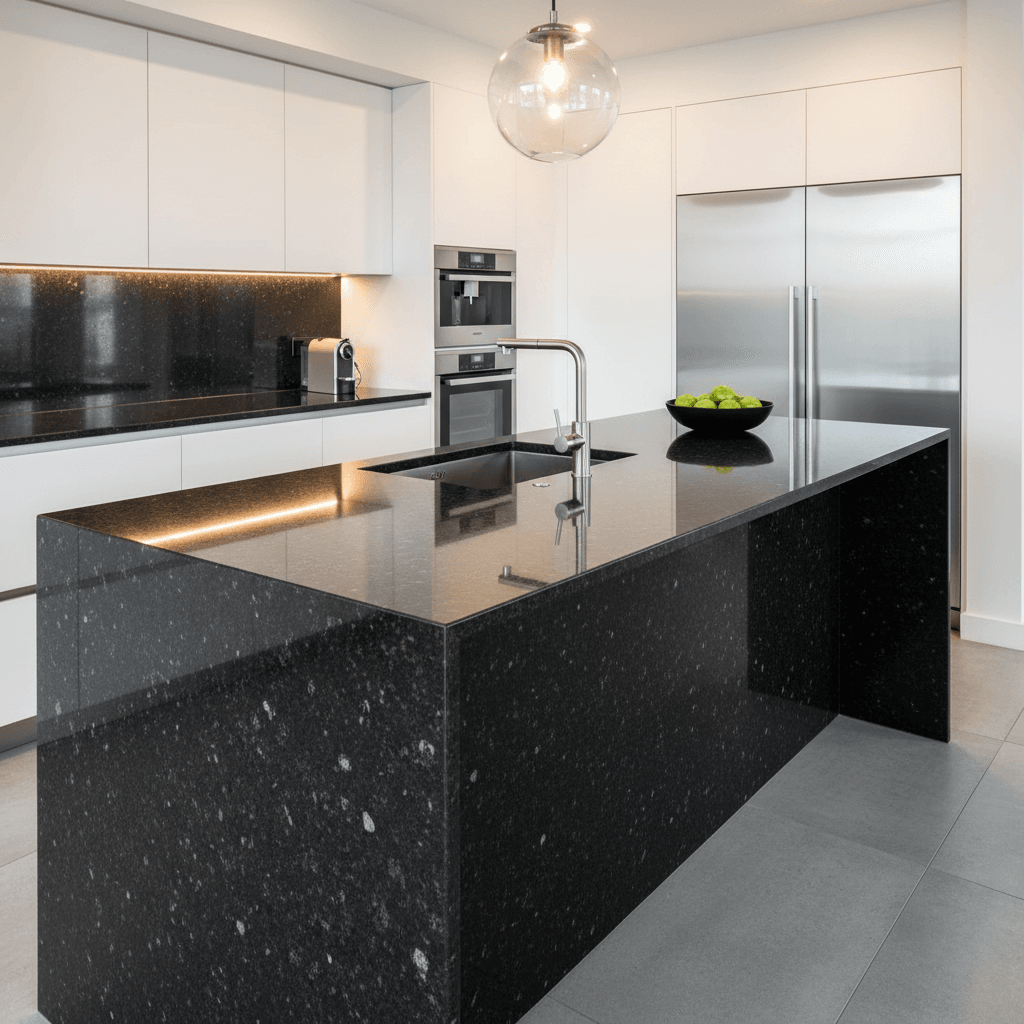
Clean soapstone countertops with warm water and a few drops of mild dish soap on a soft cloth. That’s the entire daily routine — no special products, no sealers, no rituals. Soapstone is non-porous and chemically resistant, which makes it one of the easiest natural stones to maintain. The only thing to know is that it’s soft (Mohs 2 to 4), so the wrong scrubber or grit can leave marks. This guide covers daily cleaning, deep cleaning, oiling for color, and how to handle scratches and stains.
| Product type | Safe to use on soapstone? | Notes |
|---|---|---|
| pH-neutral dish soap | Yes | Gentle cleaning for everyday use |
| Bleach or chlorine cleaners | No | Dulls the surface with repeated use |
| Vinegar or lemon cleaners | No | Wears the finish over time, even diluted |
| Mineral oil | Yes | Conditions the stone and deepens veining |
| Abrasive powders (Comet, Ajax) | No | Scratches the soft surface |
| Hydrogen peroxide (3%) | Yes | Safe for stain removal on stubborn spots |
Daily soapstone cleaning
For everyday cleanup, use warm water and mild dish soap with a soft cloth or microfiber towel.
- Wipe down with warm water and a drop of pH-neutral dish soap
- Use a microfiber cloth, soft sponge, or terry cloth
- Dry with a towel to prevent water spots (matters more in hard water areas)
- Skip abrasive scrubbers, scouring pads, and steel wool — they’ll scratch the surface
That’s it. Soapstone doesn’t trap bacteria the way porous stones can, so the same warm soapy water that handles your dishes handles your countertops. After raw chicken or fish, a quick wipe followed by a 50/50 isopropyl alcohol rinse covers the food safety side.
Deep cleaning soapstone
For sticky spills, dried-on food, or weekly upkeep, mix lukewarm water with a small amount of mild soap or a stone-safe cleaner.
- Wipe off debris first with a damp cloth
- Add a few drops of mild soap to a bucket of lukewarm water
- Wipe in circular motions, paying attention to corners where grime hides
- Rinse with plain water and dry with a soft towel
A deep clean every two to three weeks is plenty for most kitchens. For tougher messes like dried tomato sauce or oil splatter, let warm soapy water sit on the spot for a few minutes before wiping. The water softens the residue so you don’t have to scrub.
Oiling and conditioning soapstone
Apply mineral oil or beeswax to deepen soapstone’s natural color and even out the patina that develops over time.
- Use food-grade mineral oil for the simplest option — a small bottle costs under $10 and lasts a year
- Beeswax or carnauba wax gives a longer-lasting finish than oil alone
- Apply with a clean cloth, let sit five to ten minutes, then wipe off the excess
- Repeat monthly for the first six months, then every few months as needed
Skip the oiling entirely if you prefer the natural, lighter, weathered look. Both finishes are correct — it’s a style choice, not a maintenance requirement. Soapstone darkens on its own through use, and oiling just speeds it up and makes the color more uniform across the slab.
Removing stains and scratches
Soapstone resists stains because it’s non-porous, but scratches happen. Buff them out with fine sandpaper and reapply oil.
- For surface stains: warm soapy water removes most of them
- For deep organic stains like coffee, wine, or cooking oil: use 3% hydrogen peroxide or a baking soda paste left to sit for a few hours
- For light scratches: rub gently with 220-grit sandpaper or a Scotch-Brite pad in a circular motion
- After sanding: wipe away dust and reapply mineral oil to restore the finish
Most scratches you see are surface marks from metal pots or knives. They look worse than they are — a quick pass with sandpaper and re-oiling makes them disappear. Anything deeper than a fingernail can catch is when to call a fabricator.
What NOT to use on soapstone
- Bleach and chlorine cleaners — they won’t damage soapstone instantly, but they dull the surface over months of repeated use
- Vinegar and lemon-based natural cleaners — soapstone handles acid better than marble, but daily acid still wears the finish
- Comet, Ajax, and other abrasive powders — they’ll scratch the soft surface
- Steel wool or rough scouring pads — visible scratches in one pass
- Acetone or paint thinner — strips oils from the stone, leaving it looking dry and patchy
Stick with mild dish soap and warm water for almost all cleaning. The exceptions above are easy to avoid once you know them.
Common soapstone care mistakes
- Skipping the dry-down: water spots show up faster on soapstone than on granite
- Over-oiling: too much oil leaves a sticky residue that attracts dust — more is not better
- Wrong sandpaper grit: anything coarser than 220 leaves visible marks
- Cross-contamination: a sponge that’s been used on other surfaces can transfer harsh chemical residues
- Treating soapstone like marble: marble etches from a single acid spill, soapstone doesn’t — different stone, different rules
When to call a pro
- Cracks or chips along edges
- Scratches deeper than 1/16 of an inch (deep enough to catch a fingernail)
- Heat marks — rare with soapstone but possible with extreme temperatures
- Whole-surface refinishing or restoration after years of wear
For Atlanta-area soapstone repair or refinishing, our fabricators at Granite & Marble Solutions handle scratch repair, edge work, and full restoration — including installations we didn’t originally fabricate.
Soapstone care FAQ
Can you use Dawn on soapstone?
Yes, Dawn is safe on soapstone. It’s a pH-neutral dish soap, which is exactly what’s recommended for daily cleaning. Use a few drops in warm water with a soft cloth, then dry with a towel to prevent water spots.
What not to use on soapstone?
Avoid bleach, vinegar, abrasive powders like Comet or Ajax, steel wool, and acetone. None will damage the stone instantly, but repeated use will dull the finish or scratch the soft surface.
What damages soapstone?
Soapstone’s softness (Mohs 2 to 4) makes it vulnerable to scratches from metal pots, knives, and abrasive scrubbers. It’s chemically resistant, so most spills and household cleaners don’t damage it. The most common damage is surface scratching from dragging cookware.
How do you refresh soapstone countertops?
Refresh soapstone by sanding minor scratches with 220-grit sandpaper or a Scotch-Brite pad, then reapplying mineral oil to deepen the color. For a full refresh, clean thoroughly, sand any visible marks, and oil the entire surface.
Does soapstone need to be sealed?
No. Soapstone is non-porous, so unlike granite or marble it never needs sealing. Mineral oil enhances the color but isn’t a sealer — it conditions rather than protects.
Key takeaways
- Use mild dish soap, warm water, and a soft cloth for daily cleaning
- Deep clean every two to three weeks with lukewarm water and gentle soap
- Apply mineral oil monthly to deepen color, or skip it for the natural look
- Sand light scratches with 220-grit sandpaper, then re-oil
- Avoid bleach, vinegar, abrasive powders, and acetone
- Soapstone never needs sealing
With these basics, soapstone takes about five minutes a week to maintain. Most owners find it’s the lowest-maintenance natural stone they’ve owned — once you know the few products to skip, daily care is just warm soapy water and a soft cloth.
More Articles About Soapstone
Soapstone Kitchen Countertops: The Luxurious Upgrade You Deserve
Soapstone Countertops: The Pros and Cons Every Buyer Should Know
The Honest Soapstone Countertop Cost Guide You Need
The Stunning Benefits of Soapstone Countertops for You
Soapstone Countertops vs. Quartz – Which Is Right for You?